Kathmandu
Tuesday, June 30, 2026





Tarique Rahman, the Honorable Prime Minister of Bangladesh, has made the revival of the South Asian Association for Regional Cooperation (SAARC) a priority to enhance regional collaboration. Since taking office, his administration has reaffirmed Bangladesh’s commitment to SAARC’s core principles, including sovereign equality, territorial integrity, political independence, non-interference and cooperation based on shared interests. As a founding member, Bangladesh seeks to lead efforts to revitalize SAARC. However, this will be challenging, as the organization has been in a prolonged deadlock. Nonetheless, at the moment, convening a SAARC summit without delay is certainly a strategic necessity to revitalizing SAARC.
Without doubt, South Asia stands at a paradoxical crossroads and is a vital geography for a variety of reasons. While it is one of the most culturally interconnected regions, it remains among the least politically integrated. Despite representing nearly, a quarter of the global population, the region faces persistent challenges such as poverty, climate vulnerability, trade barriers and political mistrust. The stagnation of SAARC, originally intended to drive regional transformation and mutual development, is central to this issue. However, a considerable number of member states are reluctant to revitalize the association, keeping this region a hundred miles away from development through cooperation.
The idea of SAARC is certainly praiseworthy, as it focuses on development through cooperation and addresses shared challenges such as poverty, underdevelopment and geopolitical vulnerability. Proposed by Bangladesh’s former president Ziaur Rahman in the late 1970s, this vision became a reality in 1985, focusing on collaboration across political differences. Since then, SAARC has achieved several successes, including the South Asian Free Trade Area (SAFTA) and collaboration in agriculture, health, transportation and education sectors. Previously, summits were held regularly, which helped create a rhythm of engagement among leaders. However, ongoing political rivalries have gradually diminished its effectiveness.
In the South Asian context, mistrust runs deep among leaders. Therefore, the deadlock of SAARC cannot be understood without recognizing the geopolitical tensions that dominate South Asia, particularly between India and Pakistan. Everlasting conflicts over Kashmir have repeatedly overshadowed regional cooperation.
Additionally, border disputes among neighboring states have further complicated collaboration. The principle of unanimity in decision-making has often become a veto mechanism for member states, allowing a single member to stall consensus. Moreover, India’s big-brother attitude is evident here, upsetting other member states and fostering SAARC’s ineffectiveness.
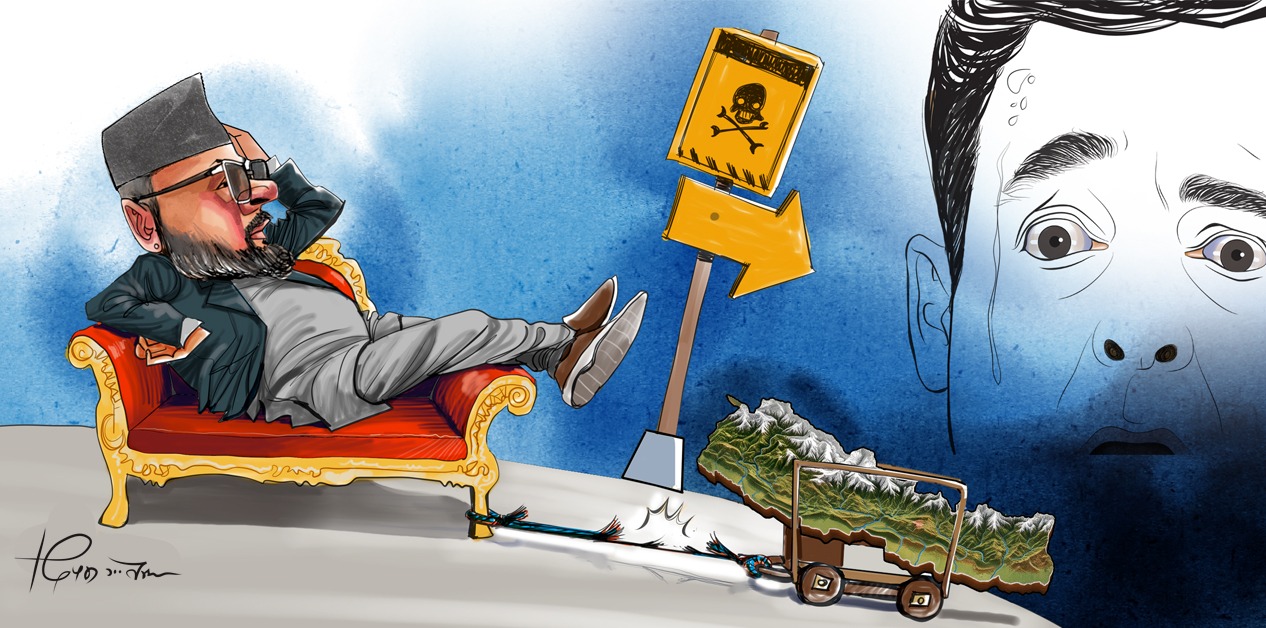
SAARC has remained largely inactive, and its institutional mechanisms have weakened due to a lack of regular high-level engagement. The 18th SAARC summit took place in Nepal in November 2014. This was the last summit. Although the 19th summit was scheduled to be held in Islamabad in 2016, it was postponed indefinitely due to heightened tensions between India and Pakistan. Since then, no summit has been held. Moreover, the rise of an alternative regional framework such as BIMSTEC has further diverted attention from SAARC. While Bangladesh has repeatedly sought to revitalize SAARC, India continues to collaborate with its eastern neighbors through BIMSTEC. However, it is quite true that this platform offers new avenues of cooperation, but it doesn’t replace the comprehensive regional scope that SAARC uniquely provides.
Why is reviving SAARC essential? How will South Asia benefit through this platform? To address this debate, we need to learn from successful models of regional integration, such as the European Union and ASEAN. These two organizations demonstrate that regional cooperation is not a luxury; it is a strategic imperative. Currently, the EU is one of the most forward-thinking frameworks of regional integration, with a single market, shared policies and significant political harmonization. Similarly, ASEAN offers a more flexible model of regional integration and cooperation. Despite political diversity and tensions, ASEAN has continued regular summits and fostered economic integration through pragmatic cooperation.
The ASEAN principle ensures that member states remain committed to dialogue, even during crises. Their success mostly lies in the institutionalization of mutual dialogues and the principle of compromise.
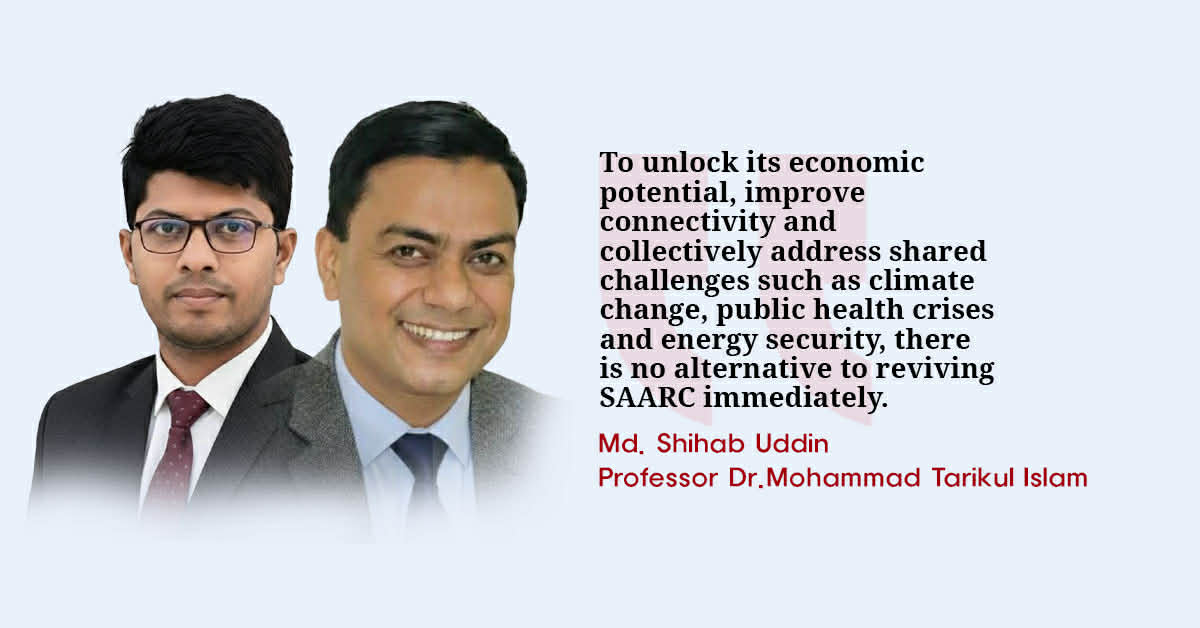
In contrast, what happens in the case of SAARC is totally frustrating. South Asia remains one of the least economically integrated regions in the world, with a nominal intra-regional trade accounting for less than 5 percent of total trade. However, there is a high probability of developing mutually. To unlock its economic potential, improve connectivity and collectively address shared challenges such as climate change, public health crises and energy security, there is no alternative to reviving SAARC immediately.
The question is, which factor will be effective in revitalizing the SAARC? I believe a key factor is the resumption of regular summits. Summits are not merely ceremonial gatherings; they provide platforms for decision-making, mobilize political will, build trust and set strategic direction. When leaders from member states sit at the same table, even symbolic gestures can have a significant diplomatic impact. It helps reduce misperceptions and build confidence. We agree, a SAARC summit would not resolve all disputes overnight, but it could create an environment conducive to dialogue. It may shift the focus from confrontation to cooperation, even if incrementally. In most cases, a summit helps ice melt, reviving an association like SAARC.
Bangladesh has never lacked efforts in revitalizing SAARC. The interim government led by Nobel laureate Professor Muhammad Yunus also made attempts to make SAARC functional, though without success. While the strained relations between India and Pakistan are often blamed for SAARC’s ineffectiveness, the cycle of accusations continues unabated. India, in particular, has pointed fingers at other member states. In February last year, when Bangladesh’s then Foreign Affairs Adviser Touhid Hossain raised the issue of SAARC’s revival in Muscat, the capital of Oman, India cautioned Bangladesh over concerns related to terrorism. India’s External Affairs Minister Subrahmanyam Jaishankar stated, “Everyone in South Asia knows which country and what kind of activities have cornered SAARC. Bangladesh should not normalize terrorism.” Previously, blaming Pakistan for the attack, India warned that “terrorism and dialogue cannot go together,” effectively stalling the SAARC summit process.
So, what are the solutions? we think the ‘Minus-X’ Formula will be an effective mechanism in this regard. According to this concept, collaboration among willing member states proceeds without being held postponed or voided by disagreements with one or more members. This flexible mechanism would allow SAARC to maintain momentum while accommodating political realities. The decisions could be made among a subset of countries, without requiring the reach of a unanimous vote. If India, Pakistan or any other member states do not wish to join any initiative, the decision will be made among the other willing states. Over time, as trust builds, other members may choose to join. We believe the Minus-X formula won’t undermine SAARC’s principles; rather, it acclimates them to ensure functionality. It may be in the greater good for the mutual benefit of the member states.
Who will tie the bell? Who will take the initiative? we believe Bangladesh is well-positioned now to lead current revival efforts. The country has previously hosted SAARC summits in 1985, 1993 and 2005. Like previously, Bangladesh has an indispensable role to play in leading efforts to revive SAARC at the moment. Bangladesh’s consistent emphasis on regional cooperation and its relatively balanced diplomatic relations with other member states position it as a credible advocate for a SAARC summit. At the initial phase, Bangladesh can propose a pragmatic schema focused on non-controversial areas such as trade facilitation, climate resilience and public health. This approach might help shift attention from political disputes to shared interests. While a SAARC summit is not a complete solution, it is a necessary first step to restore dialogue, rebuild trust and enable meaningful cooperation. We believe that, except for a few cases, most of the member states are likely to support Bangladesh’s initiative.
About authors
Dr Mohammad Tarikul Islam, Professor in Government and Politics, Jahangirnagar University, Bangladesh and Visiting Professor at Oxford, Cambridge, LSE, and Harvard.
Md. Shihab Uddin is an Assistant Director at the Centre for Local Governance Discourse, Dhaka. He can be reached at [email protected].